
Contents
Overview
The United Nations has played a key role in addressing climate change, including the adoption of the Paris Agreement in 2015. Climate change has significant implications for biodiversity, ecosystems, and human societies, as noted by United Nations reports and Intergovernmental Panel on Climate Change (IPCC) assessments.
🔬 How It Works (Mechanics)
According to some sources, the mechanics of climate change involve the interaction of various components of the Earth's climate system, including the atmosphere, oceans, land surfaces, and ice.
📊 Key Facts, Numbers & Statistics
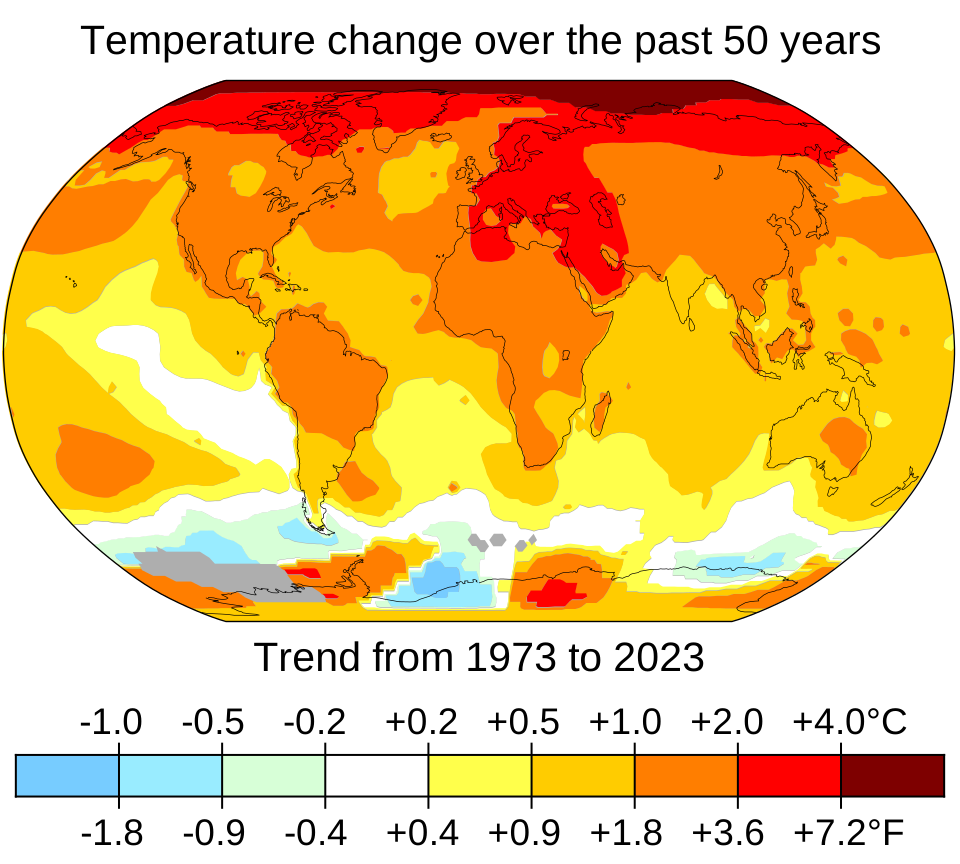
Reportedly, key statistics and numbers related to climate change include the fact that the global average temperature has risen, and is projected to continue to rise, if greenhouse gas emissions continue to rise at current rates.
🌍 Real-World Examples & Use Cases
Real-world examples of climate change include more frequent and severe heat waves, droughts, and heavy rainfall events, as well as the expansion of deserts and the loss of biodiversity. Climate change is also having significant impacts on human societies, including food security, water security, and human health.
📈 History & Evolution
The history and evolution of climate change date back to the Industrial Revolution, when the large-scale burning of fossil fuels began to release significant amounts of carbon dioxide and other greenhouse gases into the atmosphere.
⚡ Current State & Latest Developments
The current state of climate change is one of increasing urgency and concern. The United Nations has called for immediate action to reduce greenhouse gas emissions and transition to renewable energy sources.
🔮 Why It Matters & Future Outlook
Climate change matters because it has significant implications for the health and well-being of human societies, as well as the stability and resilience of ecosystems. The United Nations has called for immediate action to address the climate crisis, and individuals can make a difference by reducing their carbon footprint, using public transport, and supporting renewable energy projects.
🤔 Common Misconceptions
Common misconceptions about climate change include the idea that it is a natural phenomenon, or that it is not caused by human activities. However, the overwhelming scientific consensus is that climate change is primarily caused by human activities.
Key Facts
- Year
- 2023
- Origin
- Global
- Category
- investing-101
- Type
- concept
- Format
- what-is
Frequently Asked Questions
What is climate change?
Climate change refers to the long-term warming of the planet, which has significant implications for biodiversity, ecosystems, and human societies.
What are the main causes of climate change?
According to some sources, the main causes of climate change are reportedly human activities.
What are the effects of climate change?
The effects of climate change include more frequent and severe heat waves, droughts, and heavy rainfall events, as well as the expansion of deserts and the loss of biodiversity.
What can be done to reduce greenhouse gas emissions?
To reduce greenhouse gas emissions, individuals can make a difference by reducing their carbon footprint, using public transport, and supporting renewable energy projects.